Tuesday, April 3, 2012

Training Update, running in VFF & Barefoot

February and March 2012 will be listed high in my training history as both months give very high number of training mileages, at 183km & 221km respectively. The last time I ran >200km per month is last October, where race Putrajaya Night Marathon alone contributed 42km. I only got Brooks Half Marathon in the pass 60 days, so the mileages in both months are strictly “training mileage”.
With the high mileages, I think my body undergo second stages of reforming and start to lose some weight now. I used to think that we can eat whatever as we did lots of exercise. The painful fact is, running can help in weight and cholesterol level control, but you still need to control the diet in order to achieve the ideal weight and reducing the cholesterol level. My weight stayed at 70kg since Nov 2011 (it even went up during the heavy feasting CNY period), finally I see the weighing scale dipping below 70kg after some control of my diet lately.

I adjusted my plan, focus and intensity of the training from time to time, mainly to keep myself motivated in training. We often claimed that we enjoyed most from the “running” itself, but the dish some time can be too plain and tough to take without other drivers. I tried to follow the training plan to push up my speed and mileages, but I think my body still not tune into the mode to take the high intensity. Hence I understand I am still lacking on the strength and will not able to run at the target pace as per the plan. From now on, I will drop the recommended pace and only go with the distances with my heart rate monitored.

After CNY, I added in Barefoot into my training. Started with barefoot walking 850m on the rest/cross training days, and increasing the training mileages in all the VFF runs. The previous training in VFF helps to remove some barriers to adapt to BF running, but my soles are obviously not yet ready to take on the rough surface. The first walking BF on the asphalt surface is a painful experience. It took me 15 minutes to cover the 850m. Compared to VFF, running BF needed more adjustment on muscle groups that enabling a softer landing on forefoot. Eventhough you get a good feedback from VFF, but the experience is not even closed to directly landing on BF. The legs muscles forced to fire up in order to reduce the impact. I learned not to over stride in walking, keep my stride length short and go with faster cadence or step rate. Finally, after about 2 months of BF walking, I finally put in some speed and start to run the 1st km in BF last Monday. Cover the 1km with 9min pace. More training and exposure needed in BF. But for now, I will switch back to VFF and my focus to my sub-5 marathon target.

Talking about running shoes, as you can see my shoes list, I am working on both extreme. I run in VFF and Control/Stability Shoes (Brooks GTS10). I have 2x GTS10, one of them already badly worn with >1000km mileages (part of the outsole gone); the other one is still new with ~100km mileages. I will retire the worn GTS10 after Energizer Night Race. I am not sure if I will run in VFF, but if I don’t, this GTS10 will race in ENR as its last race. Old shoes are best in giving reliable support in race. Will get another VFF soon as the KomodoSport is badly worn on the outsole as well (caused by my lazy right feet that grazed the road surface often after 21km mark). Saw this Retro version of VFF Originals in FB, will this arrive in MAL soon?
Next race in Energizer Night Race, I will set my Visual Training Partner pace to 7.5min/km to finish the FM before 5.5hours. But I am not really good in following the game plan, tentatively the adrenalines and my ego will still push me harder until the 30km, I will properly accomplish my sub-5 target if I don’t walk at all after that (walked a lots after 30km out from ECP in SCMS last year).

See you in the Sepang International Circuit on 21 April.

Tuesday, March 27, 2012

Brooks Half Marathon Race Report

This is the 2nd race of mine in year 2012 after New Year Newton Challenge. I was so excited until I can’t sleep well on the night before. Waked up by 3:30am and decided to prepare myself for the race. The routine chores done and I left home around 4:30am. Reached the Stadium around 5:20am, but the organizer only open a small passage for ~3k runners to enter the field. Caused some delay in the flag off. Most of the participants only enter the field before the flag off at 5:37am.
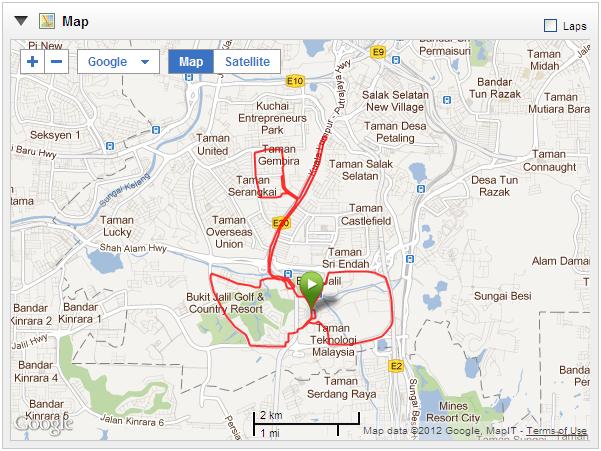
The starting line is really packed, it took me 3 minutes to cross the line. The packed feeling continue until 4km when we heading back to the bus station next to the Stadium. I ran this part of the route before, kept a good sub-6 minutes pace all the way. Planned to go faster but the traffic and participants were really packed, some time I need to go outside the barriers in order to keep my pace. Hit the first climb in front of the bus station, the pace still maintained quite well. Still ok at the second climb entering the Happy Garden. After the climb, I charged at 5.5/min all the way to 11km. Then, flatten by the back to back 3rd & 4th climbs near the new apartment/condo project site. After that, my mind didn’t register any other significant climbs until the last km heading back to the Stadium on TPM highway. Good thing is, I didn’t walked on these climbs (though I ran at 9~10min/km pace).

Similar to PJ Half Marathon 2011, we entered the Stadium and ran the oval track towards the finish line. Completed the race by running into the Stadium really gave some difference feeling. Passed the finish line on 2:17 (gun time, net time 2:14). Although I missed my target to sub-2, but looking at the tough terrain on today’s route, I think I completed in a reasonable result. May be I can train harder and plan for my sub-2 HM again in PJ Dawn.
Leaving the field and rested at seat had a good chat with Nick. He ran with some injury on the tight but still completed in a decent timing. He is also doing the review of the very handsome running shoes from Skechers, click HERE to find out more.

Overall, this is a good event that I will be returning next year.
Pro,
1. Challenging route
2. Starting point and finish line inside the Stadium

Con,
1. Crowd control. Organizer need to consider the movement of the participants, pre & post race. Pre-race, we were entering the field by a single man passage. Post-race, we needed to walk up the seating area again via some narrow passage.  
2. Traffic control on the route. We ran on the main access roads to Bukit Jalil area, is there anything we can do to avoid holding up the traffic for too long? The exhaust from these running engines not good for runners too.

Btw, I ran with Garmin Forerunner 910XT. Will post some review about this unit later.

Next race, full marathon @ Energizer Night Race.

Tuesday, March 6, 2012

Garmin Forerunner 405CX (Part III & Final)

I am with Garmin Forerunner 405CX since May 2011, until now, been through 3 units of the watch already. 1st one got from Singapore (purchase in March by my brother, but only start using in May), dead after my first Marathon in September. Sent the unit for warranty claim, AECO MAL/Garmin Taiwan return a reclaimed unit from some way else in November only (about 6 weeks down time). After my complaint, they swap a new unit with the reclaimed unit in December.
GF405CX in action during PBIM 2011.
The last unit only worked until end Feb, and its dead now. As there is no service report provided from the last warranty claim, I can’t tell if there is any abuse in my way of using it (I suspected some water slip into the unit when I rinse the unit under the tap after each run). The only thing I can confirm now is Garmin doesn’t suit my uses. May be the GF910XT with full water proof can stand on this, but I had not plan to get another into Triathlon so I will waste money for the over designed GF910XT.

2 key points you need to consider if you are in the mid of considering Garmin Forerunner as your next GPS training device (in Malaysia),
1. Service, the distributor have good network coverage with few branches in Klang Valley, but most of the outlet and even the HQ don’t have the capability to do anything on Forerunner. In most of the complaint case, your unit will be return to Garmin Factory in Taiwan for further inspection and troubleshooting. Prepare for some down time. And if you are getting your unit outside of Malaysia (not AECO authorized), you will need to pay postage for the trip to Taiwan.
2. Battery, lots of complaint about the battery life, but there are some users reporting a very good battery life (>2 years). It is a factory installed battery means you will not able to change battery yourself. In the event of battery dead, you can send your unit for reconditions in Garmin with some charges. Do factor the cost of refurbishment and down time in if you plan to use it for long term.

I am now running with the Polar FT4 and all routine workouts done in a fixed 3.2km course (a straight road near by my home). Long run will depend on the Nokia SportsTracker. I am looking for suitable GPS/footpod unit as replacement. Eying on Polar RCX5 and Timex Run Trainer but my running budget running low lately. For time being, I just need to wait! 


GF405CX Part I
GF405CX Part II

Monday, February 20, 2012

Training plan for a Sub-5 Marathon

One of my 2012 target is to run a sub-5 marathon. I put up a training plan and some tips to remind myself on how to do it. Now, 10 weeks passed. I had faithfully stick to the plan for the first few weeks, but after my New Year Newton challenge, things just keep popping up and I didn’t able to follow 100% to the plan.

The plan mainly divided into 2 types of training, mileage/endurance training and target/strength training. Mileage training is those easy run and long run. You basically run at easy pace to accomplish certain mileages in order to build up the endurance. Say you hearth rate stabled at 145BPM around 6:30 pace after your body fully warmed up. It will start increase when you hit your endurance’s limit even you going in the same pace. This training helps to extend the 145BPM @ 6:30 pace for a longer period of time. On the other hand, target training working on your strength with tempo runs and speed works. It will reduce your stabled hearth rate @ 6:30 pace, say to 140BPM by time. Your body is now more efficient at the speed and the heart can relax a bit.

Out of all training plan, my personal preference will be speed work. The feeling of exploration to see how fast you can push your body is great! When my speed approaching the peak at sub 5 minutes pace, the feeling of you are about to take off from ground is just fantastic! This is a zone that I seldom experienced in my previous trainings or even in races. I am not a fast runner. Now I can only stay a very short period of time at this zone, but I think the speed works repeats will improve my running and may be this will be my easy pace one day.

On tempo run, it’s just like a faster easy run. Whenever I waked up late, all easy runs will upgraded to tempo run automatically (some time even to speed works if there is not enough time).

For long runs (which is >26km with easy pace), I never completed both requirements, targeted mileage with the suggested pace. I will either meet the pace with less mileage, or meet the mileage with slower pace. In the last 32km long run, suggested pace is 6:52, but I did with 7:40. Anyway, this is the first time I actually did LSD at 32km. Most (if not all) marathon training plan will propose the longest run of 32km before the actual 42km race. You may ask, how about distances in between 32~42km? After I did the mine, I start to understand the few reasons behind,
1. You need to allocate plenty for these slow long run (a marathoner typically cover 32km in 2.5~4 hours). Apart from commitment on time, running long hours outside may have difficultly to get hydration and food supply.
2. The physical & psychological wall may hit you anytime. You need to put in lots of effort to complete the 32km, and there will be not cheers, finisher medal and finish line awaiting you at the end of the workout. Some time, to deal with the psychological wall is more challenging then the physical one.

The 32km runs will give you a glimpse of the overall effort you needed on the marathon day, without wearing you out in the mid of training. Anyway, there is still a 10km gap to fill up during race day. The theory that normally used is the adrenaline rush on the event day will get you thru the 10km.

Looking at the LSD result, I am not ready for a sub-5 marathon. I will use the next marathon (Energizer Night Race 2012, 21 Apr) to gauge the effectiveness of the training plan, and then adjust accordingly. The target for ENR 2012 will be simple, run the whole 42km with minimum/no walking & complete within 5:44 (timing from SCMS 2011).
Regarding ENR 2012, its organized by 21st Century (who organized the 2011 Putrajaya Night Marathon and many other races). This is one of the reason I joined this race (other reason? There is no other Marathon event until June in Malaysia, how sad). As last year was a total failure, it will be difficult NOT TO IMPROVE in this year event. I am confident that they will do a good job! See you on the starting line :)

Monday, February 13, 2012

Running in VFF KomodoSport (Part II)

I got my VFF Komodo Sport since July 2011. For the whole year 2011, the longest training and racing distance covered in VFF is 12.3km during the Men’s Health Night Race. The running in VFF then was temporary put on hold as I signed up The River Jungle Marathon and lots of training needed for my first 42.195km. I will not able to cope with the training loads that focused on both endurance (FM training) and strength (VFF training).

4 months had gone; I completed 3 FM and some races in shoes. VFF used only few of my shorter training workouts. I didn’t lose my interest in running with VFF and finally, I restarted the VFF training in last month. It’s still fun to run with VFF! I spent all the training in CNY breaks with VFF in Ipoh, and the legs eventually addicted to the feeling. Post CNY, I completed 2 more LSD in 19k & 21k respectively in VFF. The experience is great and I didn’t have much problem post run. Only felt some hot spots on my sole and both calves are sore.
2012 CNY running in VFF, before the Bare with Me! mini running clinic. Photo by Tey.
I also joined the mini clinic that organized by Facebook group “Bare with Me!” regarding barefoot running. It was a great sharing session by the seniors/experts who love to running barefoot. I realized that I am still lagging on calves & quads strength and the sole is still too soft. Barefoot drills needed to fix these shortfalls. Some key take away from the clinic (for barefoot or minimalist shoes runners),
1. Running light with soft landing on mid foot.
2. Training on hard surface is better than soft surface.
3. Barefoot drills as cross training will helps to improve the strength of the muscles groups and the sole.
4. Important to run in proper form.
5. Give your foot & legs enough time to heal, never attempt running TMTS (too much too soon).
(More detail in FB post by CPTan, LINK)

Now I am included a morning of barefoot walking (hopefully soon it will be running) as part of the cross training. You will never realize how rough our road surface really is until you do this. The first BF walk was painful! I will also alternating the VFF and shoes on weekly basis. Hopefully I will be ready to run with VFF in SCKLM in June.

Wednesday, January 18, 2012

Training update & Further Thought on Running Injuries

After the Newton Challenge, I did my regular training runs on the following Tuesday (easy run) and Thursday (tempo run). After the morning tempo run, my lower back started to ache badly when I back in office. So I need to break on Friday and cut short the weekend long run.
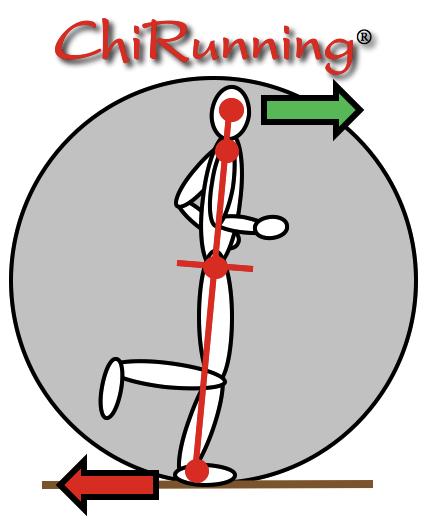
Looking back on the source of the lower back’s ache, I think it’s caused by the last few kilometers speeding in Newton Challenge. Even thought I throated the speed from starting of the race, the body fatigue over 25km still very significant, hence I didn’t focus on my running form when I pushed at the final leg. I forgot the correct pose to run fast, which can be summed up in the Chi Running picture. I ran in bad posture and lots of stress cumulated at my lower back area. It just exploded after my tempo run. For workouts in this week, I kept checking on the gait to make sure I ran with up right body, and keep the up & down body motions to minimum. So far, after 2 easy runs, 3 speed works and a 30km long run, the lower back seem recovered and not giving another problem.

Talking about relation between postures and running injuries, we often refer to running gait only. For us who work in office, the sitting posture is actually far more important then the running gait. You sit in your work desk for 8 hours x 5 days a week, and run 50km in 7 hours a week. The running potion is less then 20% from the 40 hours of sitting! Your sitting posture will post some serious effect to your muscles groups & even to the spinal. I am not a doctor so I will not able to explain much, if you are interest to know more, please refer to here.

Few things you can do on your sitting posture to reduce the impact and risk,
1. Stop crossing your legs.
2. Keep both of your feet flat on the ground.
3. Don’t lean forward.


Some training that can improve your sitting posture and reduce the pain (if you already suffering some pain on lower back),
1. Yoga Butterfly stretching.
2. Superman pose stretching.
3. Spinal twist stretching.
4. Lower back muscles strengthening exercise – V-Up.
All these training can be done in low intensity before your bed time.

Spinal Twist

Yoga Butterfly

V-Up

Superman

Tuesday, January 3, 2012

New Year Newton Challenge Race Report

It was 4 weeks after SCMS but I am still struggled on my usual mood swing towards the end of the year. Whenever a major event is over, I normally felt kind of loss. Often, end of the year will posting the similar effect to my mood swing. That why I normally don’t schedule any major event towards year end. This year, this is unavoidable and SCMS is hitting me hard. Especially there the list of registered race is depleting fast and I can’t find any local race (oversea race will burn a hole on my wallet and may worsen the mood swing to depression) to fill it up.

During the Malakoff 12k, I don’t felt the usual excitement before, during & after the race. May be I took it too easy or I really got the over-trained syndrome (as described by Doc PuiSan in HERE). For time being, I am just following the 6months plan to tune myself properly for a sub-5 marathon (SCKLM) and hope I will soon recovered from the dipping mood. The New Year Newton Challenge is actually what I am looking forward to flip the mood.
The race is held at very challenging Bandar Kinrara Ammah Hill. There are lots of warning and sharing by experience runners about this route, so I will not really pushing for any dramatic speeding or PB. On the other hand, I am planning to run this race with slightly difference strategy, starting slow, pushing hard only if I felt like it towards the end of the race.

The race flagged off on time. I started at the mid of the pack and kept my pace at around 7min/km. The first 4km are ok, the usual settling period come and goes, and I can finally settle into the comfortable running mode. Then, the first drastic climb came right after the left turn at the traffic light towards the first U-turn point. My pace dropped but I pushed on and never stop for walking. Pushes my effort to conquer the peak, slow down when the Hearth Rate touched 160BPM, continue to push again when HR dropped to 150BPM, and then wait for the descending come. I hold back my legs during descending so that the HR dropping back to 140BPM zone. You can tell from my HR chart which it peak with the route climbs. After we took the U-turn and back to the traffic light, at 10km point with the dawn skylight, we can see the breathtaking Ammah Hill with 120ft climb for the next 1km. I went on and take down the Ammah Hill with the same push and hold strategy. I was only repeating the same thing for the rest of the course.
Towards the Finish Line, Photo by Louis Ong
Finally, I am at the second U-turn clocking 15th km (average pace 6:50/km). I felt like I wanted to push more, so I kicked in the high gear and pushing all the way back to finish line. Btw, the hilly route limited my effort; I can only do 6:23/km on average for the balance 10km. I took the advantage of the final 2km which is rather flat to push to sub-6 minutes pace and finished the race in 2:42’36”.
I found that I really enjoy this very obvious up-down hilly route. If you look into the elevation chart, there are total of 6 continuous ascends that more than 100ft in 1km. So, on the bright side, there are also total of 6 continuous descends with the same scale. You can really looking forward a good rest after each tough fight with each hard climb. I guess the Ammah hill is highlighted as it actually lay down the total 1km climb right in front of you (without any turns and twists like other climbs on the same route). Overall, the race is well organized but some improvement needed in term of water stations manning (at 14km) and traffic control (from 4~10km, and the finish line area). I fully understand that some of the roads are the only access to some housing area and highway, but a better planning will sure helps to reduce the potential hazard to all the participants.

I am happy with my game plan which actually helps me to finish strong in this race. This valuable lesson will be great helps in my future marathon or other running events. This adds in motivation to my running, and I am now looking forward not only to races, but also to each training and long runs. I guess I had successfully flipped my mood. It may be due to the great run in Newton Challenge, or just because it is now January! I will not digging in further, now, time to enjoy the life with lots of running :)